Cooking in Al-Andalus was an international affair, flavored by the tastes of India, the Spice Islands, Persia, Africa, and places in between from which cultural elements were gathered and brought to the Iberian Peninsula with the Muslims. Herbs and spices like basil, saffron, coriander, jasmine, and mint and spices such as ginger, aniseed, tamarind, cloves, and cinnamon combined exotic imported plants with those that were native to the Mediterranean climate of Spain.
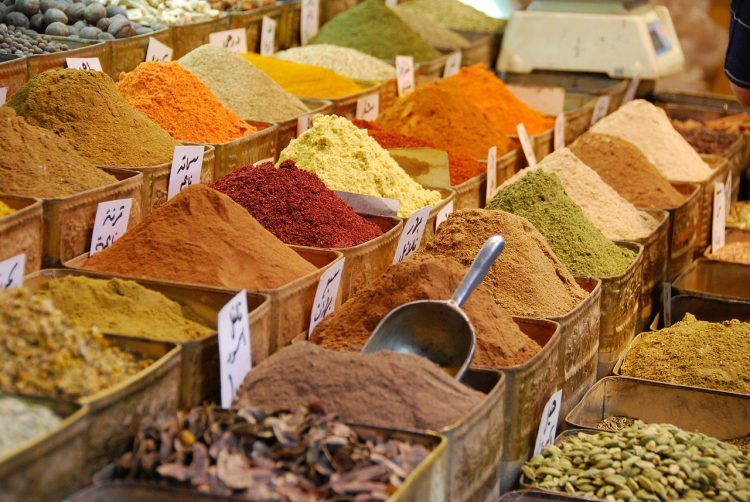
The transfer of new crops, from sugar cane to grains, fruits, and vegetables, was aided by irrigation systems and trade connections in the Muslim lands. Eggplants, artichokes, melons, bananas, spinach, figs, dates, citrus fruits, and a wide variety of nuts and seed crops for oil were added to the native plants known in Roman times.
Syrian, Persian, and Central Asian cooking combined with foods from India that had reached Iran in pre-Islamic times, and then spread rapidly westward along the Mediterranean. Abbasid Baghdad was a meeting place for cuisines collected by the empires that had flourished there in previous centuries. A 10th century literary dictionary of Baghdad listed a dozen cookbooks. Food fashions spread among the newly wealthy families of elite Abbasid era society.
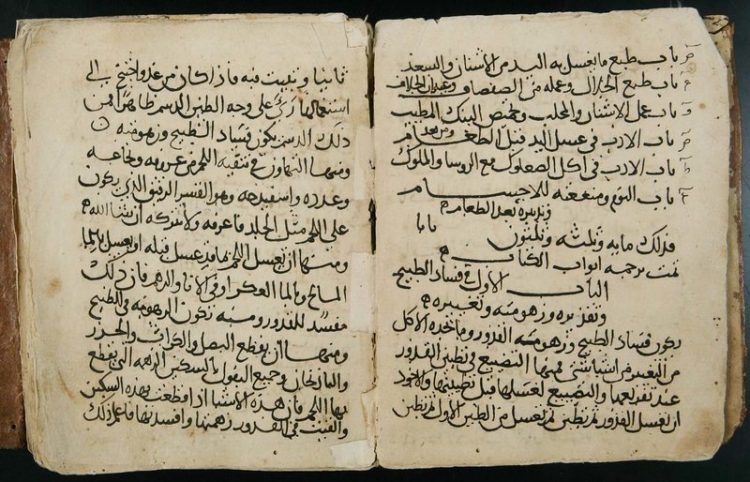
In the urban and urbane societies of Córdoba, Seville, Valencia and Granada, and in the lesser cities and countryside, farming and cooking arts flourished and combined in new ways. Ziryab, the musician who brought fashionable ideas from the east, also brought the idea of different courses for a meal and table manners. Some cookbooks from the time survived, but even more, ways of preparing food and combining ingredients passed from cook to cook, despite the turmoil of exile, conquest, conversion, and migration that happened to the Muslims and Jews of Al-Andalus.
Among the ways of cooking and eating habits that can still be recognized in Spain and Portugal today are:
- Sharing food from a communal dish, such as paella (the rice, saffron and seafood dish), and prepared grains like semolina and shredded bread
- Flavors of coriander, cumin, and saffron for savory and sweet dishes; meats, rice, fish, and beans
- Spicy stews using chickpeas, lentils and other beans, and cracked wheat; these were brought from North Africa and the eastern Mediterranean, and as far away as India (Mexican mole sauce dishes are believed to have come from this tradition)
- Fritters like doughnuts, and desserts with almonds, cinnamon, and other ingredients
- Flatbreads, thin pasta, grilled meats and shish kebabs
- Exotic vegetables and fruits like eggplant, artichoke, quinces, and apricots, among many other foods that made their way westward from Asia.
The invention of pasta or macaroni is claimed by many cultures, and multiple claims may be true. One sure way to trace the invention of pasta is the parallel spread of hard, or durum wheat. Durum wheat, unlike soft bread wheat, contains less moisture and more gluten (protein), which makes the stretchy dough that can be rolled and shaped. Durum wheat can also be stored for a long time. Where only soft wheat was grown, pasta wasn’t possible.
Scholars trace the movement of durum wheat from Central Asia across the Muslim lands through literary sources. Spain and Sicily under Muslim rule were both places where pasta was mentioned and durum wheat or semolina was grown. Andalusian geographer Ahmad al-Razi described hard wheat in Toledo in the 9th century CE, saying, “The air [of Toledo] is excellent and grain stays a long time without changing.”
It is repeated by other writers, and a 13th century Andalusian cookbook contains early references to macaroni — round balls, thin sheets, and long noodles like vermicelli. The Arabic name for pasta is itriya, a word that spread with variations into other languages, including Spanish alatria and familiar word tria or trij in Italian.
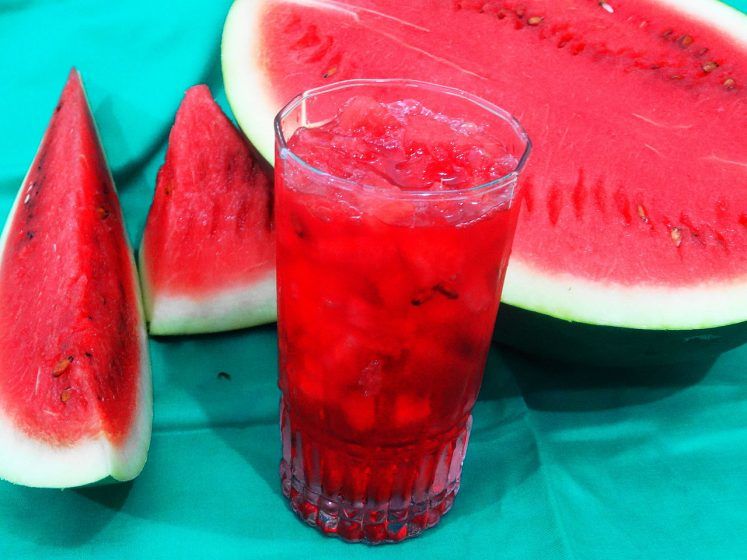
The introduction of sugar cane and its refining process was also crucial to certain foods. Sweetened, spiced or herbed fruit drinks known in Arabic as sharbat (pronounced shar-BAAT) were made into the pinnacle of luxury at the Andalusian courts by adding to them ice carried from the mountain snows. Many a traveler would never forget them. Some sweet drinks had medicinal qualities and were used in concentrated form as the sweetened syrups that made bitter medicine go down, such as cough syrups.
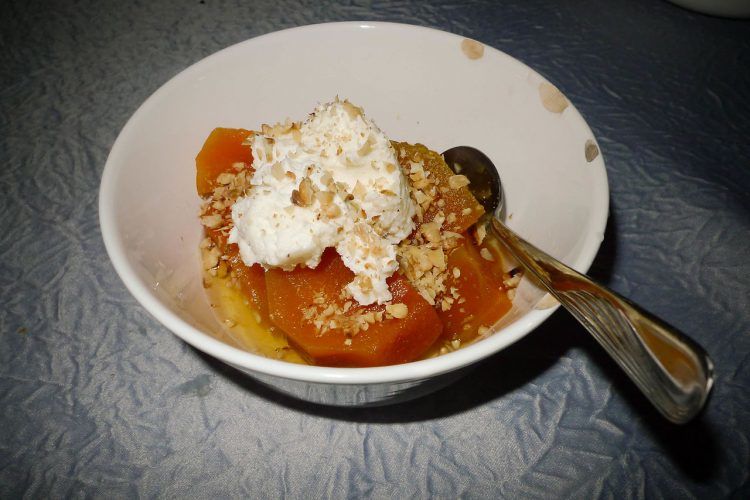
Sugar is also a preservative, and summer fruits could be kept in an even more delicious form when dried, like figs or dates, or candied like oranges, cherries, or ginger slices. Boiling in sugar syrup made fruit preserves such as jams and jellies which could be kept for months. Candied pumpkin turned ordinary squash into an Andalusian treat, for example, or quince jam made an inedible but healthful fruit delicious.
It is very likely that scholars who came to Toledo to feast on the libraries of scientific works in the 11th century also feasted their sweet-tooth on the famous confection of that city: marzipan. Just as the scientific literature crossed the Pyrenees, so did that candy (Arabic= qandi) made of almonds and sugar. Something like it may have originated in Central Asia, but marzipan became an art form in Al-Andalus.
It was made possible by the Arab introduction of sugar to the Iberian Peninsula, combined with almond trees so plentiful that the Andalusian hills looked as if they were covered in snow when they bloomed. As early as 700 CE, Arab writers mention marzipan, and by the 11th century in Toledo, it had become a Christmas custom among the Spanish Christians. It then spread into northern Europe, where it is still a traditional holiday treat.
Many more dishes and types of food might be mentioned, and with the flow of people today between North Africa and Europe, the earlier conquest by cookstove is being repeated in the 21st century, restoring some of the cuisine of Al-Andalus to Spain.