During its nearly 800-year lifespan, Al-Andalus witnessed the rise, and demise, of numerous dynasties. Other Muslim lands in the east also experienced transitions of leadership from one Muslim ruling group to another. However, unlike these other areas, it was the political and military shifts in Al-Andalus that ultimately weakened Muslims’ hold on Iberia.
Initially, almost the entire peninsula came under Umayyad rule. By the 10th century, the Umayyads projected the image of a strong and vibrant state that could withstand any onslaught from the Christian north.
However, from the 11th century onwards, local petty kings and Amazigh (Berber) dynasties based in Morocco came to rule Al-Andalus. As a result, the size of Al-Andalus steadily contracted. Christian rulers claimed cities like Toledo, Valencia, and Zaragosa, bringing about the birth of Reconquista.
By the mid-13th century, Córdoba, Seville, and other Muslim cities had been conquered, and Al-Andalus was about one-eighth its former size. It existed only in areas controlled by the Nasrid Kingdom of Granada. The surrender of Granada to the Catholic Monarchs in 1492 marked the end of a once-magnificent Hispano-Islamic civilization.
Umayyads (711 – 1031 CE)
Muhammad, the prophet of Islam, died in 632 CE in Medina. Following his death, several of his close companions succeeded him as caliphs. The term caliph is a transliterated version of the Arabic word for “successor” or “representative.” They included Abu Bakr, Umar, Uthman and Ali.
During this time, Muslims had extended their rule outside Arabia to include much of today’s Middle East and parts of North Africa. Thus, they reduced the size of the Byzantine Empire and brought the Sassanid Empire in Persia to an end.
In 661 CE, opponents of Ali assassinated him. Then-governor of Syria, Mu’awiya, acquired leadership of the caliphate and moved the capital to Damascus. He was of a member of the elite Meccan tribe of Banu Umayya.
Mu’awiya designated his son, Yazid, to be his successor. In effect, this designation created the first Muslim dynasty: the Umayyads. During the next century, his descendants expanded Muslim rule northwards into Anatolia and Central Asia, eastwards to the borders of India and westward across North Africa.
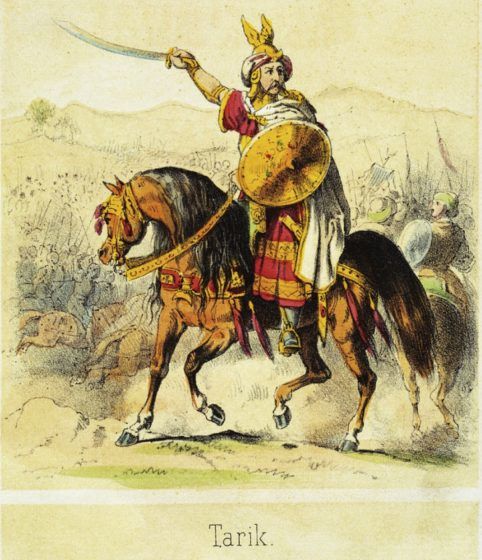
In 711, Amazigh (Berber) commander Tariq ibn Ziyad led an Umayyad force across the Mediterranean into Spain. They defeated the army of the Visigothic king, Roderic. The caliph in Damascus appointed an Umayyad governor to rule most of Iberia. The Muslims called this new land “Al-Andalus.”
In 750 CE, the Abbasid family rallied support among opponents of the Umayyads and overthrew the dynasty. The Abbasids were a noble clan descended from one of Muhammad’s uncles. They took control of the caliphate and established their new capital at Baghdad.
While many of his relatives were killed, a young Umayyad prince named Abd al-Rahman sought refuge among his Amazigh (Berber) mother’s tribe in North Africa. He crossed over to Spain. In 755, he gained control of Córdoba. There, he became amir (ruler) of Al-Andalus, which was independent from the Abbasid caliphate.
Others followed Abd al-Rahman’s example, such as Idris — a descendant of Ali — who established the Idrisid Dynasty in Morocco around 788.
The Umayyad amirate lasted until 929 CE. An Umayyad descendant named Abd al-Rahman (III), who was not content with the title of amir, declared himself caliph. In doing so, he openly challenged the Abbasids’ claim. He also countered the Shi’i Fatimids in North Africa, who had recently taken the title of caliph, as well.
The 10th century Umayyad caliphate in Spain represents the pinnacle of unity, power, wealth, and scientific and artistic achievement in Al-Andalus.
The rise to power of an ambitious palace official, Muhammad Ibn Abi Amir (Al-Mansur), initially enhanced the Muslims’ military strength in the peninsula. But, Al-Mansur’s military regime threatened the internal stability cultivated over several centuries, sowing the seeds for civil war.
In 1013 CE, Amazigh (Berber) troops seized control in Córdoba, killed Caliph Hisham II and sacked the palace city, Madinat al-Zahra. Amid chaos and tragedy, the leading religious authorities in Córdoba dissolved the caliphate. This move opened the way for former governors and city administrators to become local kings of a fragmented Al-Andalus.
Petty Kings/Muluk al-Tawa’if (1031 – 1086 CE)
Competition and political intrigue among Arabs, Berbers, and Slavs in the late Umayyad period contributed to the fragmentation of Al-Andalus.
With central authority destroyed, local leaders of about 30 cities and surrounding territories declared themselves independent rulers. Historical sources describe these rulers as muluk al-tawa’if (petty kings): each represented a faction or party with its own interests and resources.
For example, the chief judge of Seville became the ruler of that city. Thus, he founded the Abbadid dynasty, famed for its poet-kings. The Amazigh (Berber) Zirids founded Granada, after being invited to rule its region by the populace. Meanwhile, Slavs (former slaves of the Umayyads) took control of coastal cities, such as Denia and Almería.
The taifa kings competed with one another, attempting to annex territories and increase their wealth. They often sought Christian allies in their efforts against other Muslim rulers.
Despite the collapse of political unity, Umayyad court culture spread during the taifa period, as each king sought to style himself as a worthy ruler. The petty kings vied to recruit the most famous poets to grace their courts, and the most skilled artisans to adorn their halls.
However, the petty kings’ self-absorption ultimately led to their demise. During this time, Christian rulers became increasingly unified and began to consider expanding into the southern peninsula.
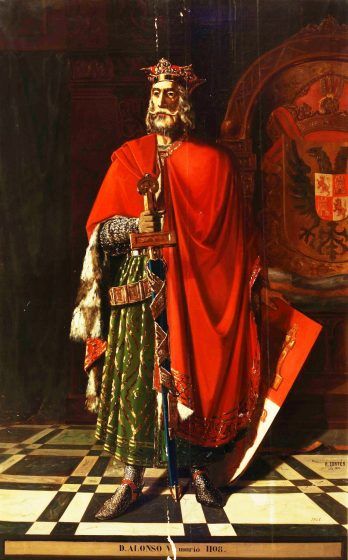
Alfonso VI of León-Castile’s success in taking possession of Toledo sent shockwaves through the palaces of the petty kings, prompting them to call on North African warriors for support.
Almoravids (1086 – 1146 CE)
Around 1040 CE, Yahya ibn Ibrahim — a Amazigh (Berber) chief of the Sanhaja tribe in southern Morocco — made a pilgrimage to Mecca. On his return journey, he stopped at Qayrawan in Tunisia, where he attended scholarly gatherings. Yahya came to recognize that religious knowledge among his people was lacking. So, he returned home with a preacher named Abd Allah ibn Yasin.
Ibn Yasin’s puritanical message met with resistance among ibn Ibrahim’s people. In response, both men retired to the Sahara and founded a ribat (isolated, fortified retreat) to attract only committed disciples. The followers of Ibn Yasin came to be known as al-murabitun, which is Latinized as the Almoravids.
This highly cohesive and disciplined group soon acquired a military dimension. In 1053, they began spreading their teachings across southern Morocco.
An Almoravid commander named Yusuf ibn Tashufin founded Marrakesh in 1062, which served as a base of operations for northward expansion. Thus, a local religious and political movement grew into a large North African empire.
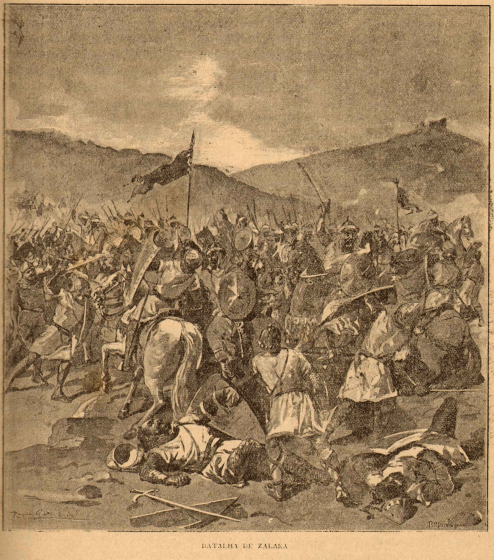
The petty kings of Al-Andalus appealed to ibn Tashufin to defend them against Alfonso VI. In 1085, the Christian king had conquered the important city of Toledo. Welcoming the opportunity to help defend Muslims, ibn Tashufin crossed the straits to Spain. He then inflicted a severe defeat on the Christians at the Battle of al-Zallaqah.
As ibn Tashufin promised to the petty kings, he returned to Africa. However, a renewed Christian threat obliged the kings to ask for his assistance again. When he returned to Iberia in 1090, the Al-Andalus populace expressed support for Almoravid rule. They hoped he would depose the Muslim kings. These kings taxed the population heavily to support their extravagance and make tribute payments to the Christians. However, not long after the Almoravids came to dominate Al-Andalus, they became the target of popular resistance among native Muslims for their foreign and puritanical ways.
By 1094, Ibn Tashufin removed almost all of the petty kings, reunified a large portion of Al-Andalus, and kept the Christian rulers at bay. His success garnered praise far and wide, leading the Abbasid caliph in Baghdad to grant him the title of Amir al Muslimin (“Prince of the Muslims”) in 1097 CE.
Almohads (1146 – 1230 CE)
Another group of religious reformers in Morocco, known as al-muwahiddun (“those who proclaim God’s Unity”), followed on the heels of the Almoravids.
Around 1100 CE, the pious Ibn Tumart journeyed as a young man to Mecca. He was a member of the Masmuda tribe of Amazighs (Berbers) in the Atlas Mountains. He was expelled from the city for being overly critical of others. He reportedly went to Baghdad, where he studied with eminent religious scholars. He formulated a unique theology that was a variation on established Sunni doctrine.
After his return to Morocco, he began publicly preaching and inciting attacks on wine shops and other “objectionable” businesses. In the city of Fes, he castigated the sister of the Almoravid ruler for going about unveiled, but he escaped punishment for such an affront.
Ibn Tumart moved to a ribat at Tinmal in the Atlas mountains. When he died in 1128, his main disciple, Abd al-Mu’min, kept his death secret for two years, until his own influence upon the followers was secure.
Abd al-Mu’min came forward as the lieutenant of the “Mahdi” Ibn Tumart, a messianic figure who had come to restore peace and justice. Abd al-Mu’min’s forces steadily eroded Almoravid power, conquered Marrakesh, and extended their reach across northern Africa and into Al-Andalus.
In 1170, the Almohads made Seville their regional capital, signified by the construction of a Great Mosque and the massive minaret known today as the Giralda.
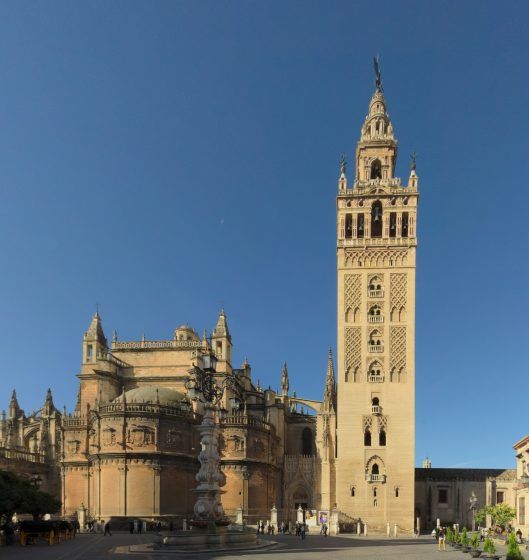
The Almohads’ emphasis on purity and simplicity is evident in their aesthetic tastes. Unlike the Almoravids, the Almohads resisted the allure of the luxurious, sensual Andalusian lifestyle, preferring to maintain a military posture.
What’s more, their policy towards Jews and Christians was in some ways less tolerant than that of earlier rulers. As a result, some members of these communities sought refuge outside Al-Andalus. For example, the family of Moses ibn Maimon (Maimonides) emigrated from Córdoba to Fes, then on to Cairo, where Jews thrived under the reign of Salah al-Din and his successors.
In 1195, Abd al-Mu’min’s descendant, Ya’qub “al-Mansur”, defeated Alfonso VIII of Castile in the Battle of Alarcos. However, the Christian states in Iberia were becoming increasingly organized.
At the Battle of Las Navas de Tolosa in 1212, the combined forces of five Christian princes representing Castile, Léon, Navarre, and Portugal defeated Almohad ruler Muhammad III.
Almohad power declined rapidly. Bitterness towards the Almohads by native Muslims led them to revolt, deposing and killing some of their Almohad governors and calling on Christian powers for aid. Ferdinand III of León-Castile captured the Andalusi towns of Córdoba in 1236, Jaén in 1246, and Seville in 1248, leaving only Granada as a tributary Muslim state.
Nasrids (1232 – 1492 CE)
As Almohad rule in Al-Andalus collapsed in the early 13th century, Muhammad ibn al-Ahmar (or ibn Nasr) gained control of Granada. A horseman of Arab lineage, he founded the last Muslim dynasty in Iberia.
Ibn al-Ahmar sought a truce with Fernando III of León-Castile. He agreed to assist Fernando in the conquest of Seville. In return, Granada would be allowed to remain a Muslim domain.
Upon returning to Granada, Ibn al-Ahmar proclaimed despondently that “there is no victor but God,” which became a slogan closely identified with Nasrid rule.
The Nasrids paid annual tribute to Ferdinand III and his successors. Yet, Granada continued to prosper due to the influx of Muslim and Jewish scholars, artisans, merchants, and farmers from territories newly acquired by the Christians. Nasrid ceramics, silks, and other luxury goods, were very popular among the Christian elite in the north, as they could not produce such items themselves.
During the height of their power in the mid-14th century, the Nasrids extended the royal residences. They created the Alhambra, a vast new palace and garden complex, dubbed al-hamra (“the red”) by the inhabitants of Granada.
By the early 15th century, several factors reduced Nasrid prestige and power. Two main factors were rivalries between the palace wazirs (ministers) and military expansion by the Amazigh (Berber) Marinid Dynasty in Fes.
Then, in 1469, the fateful union of Isabella of Castile and Ferdinand II of Aragon launched a concerted effort to unify all of Spain under a common religious identity. In 1492, they conquered Granada, raising their banner atop the Alhambra’s highest tower.
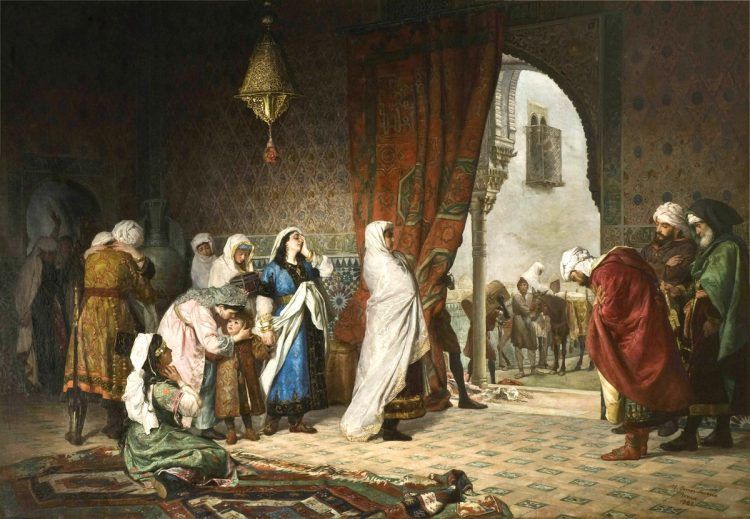
The last king of Granada, Abu Abd Allah (known popularly as Boabdil), surrendered the city in a formal ceremony. After handing off the city, he passed into the mountains south of Granada, sighing as he looked back on what was lost.
The Catholic Monarchs immediately decreed the expulsion of the Jews from Spain. In 1609, their descendant, Phillip II, issued a similar decree expelling Moriscos, who had attempted to resist the Christianizing practices of the Inquisition.
Today, some descendants of Jewish and Muslim émigrés to North Africa and other Muslim lands keep in their possession the beautifully-crafted keys to homes that once belonged to their ancestors in a land called Al-Andalus.