Botany, the study of plants and their characteristics, is closely related to agriculture and pharmacology, which were both fields of achievement in Al-Andalus. Beyond plants used for food and fiber crops, or medicine, gardening was an important contribution during Muslim rule in the Iberian Peninsula. As in so many other cultural and scientific fields, there was a tendency — in the face of huge amounts of evidence to the contrary — to ignore or downplay the achievements of Al-Andalus under Muslim rule. This has recently begun to change, and the influence of Islamic gardens and botanists has begun to find recognition.
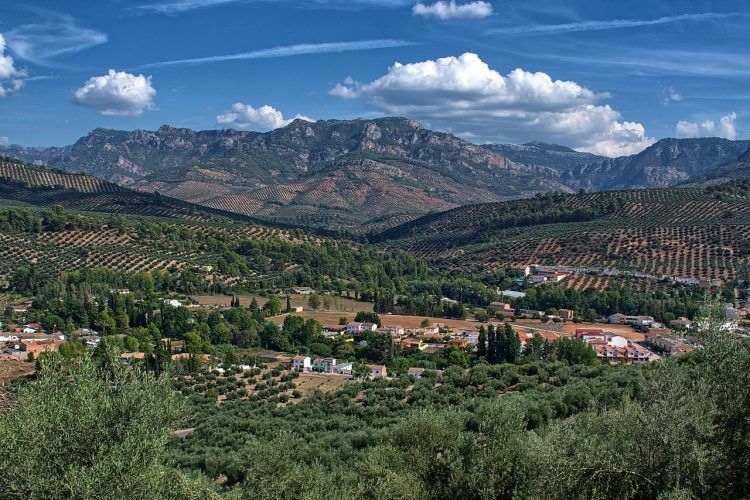
Identification of plants cultivated in Andalusian gardens between the 10th and 15th centuries can be traced to several main works of botany. One such source is the Cordovan Calendar, an almanac of weather, planting and harvesting times, and Christian holy days. This book dates to the reign of al-Hakam II, Umayyad ruler of Al-Andalus, between 961 and 976 CE. The Cordovan Calendar lists over one hundred plants.
The book of Ibn Bassal produced in Toledo (ca. 1075-1080) also lists over 100 ornamental and useful plants. Ibn Awwam wrote a huge encyclopedia of agriculture around 1138 CE at Seville in which he named and described about 160 different plants and their uses. Ibn al-Awwam’s book was translated into Spanish and published as late as 1802 at Madrid, and it has helped to restore the botanical history of Al-Andalus to its rightful place.
Another work is the Treatise on Agriculture by Ibn Luyun of 1348 CE, at Seville, which lists about the same number of plants. These rising numbers indicate that new plants were being introduced and successfully grown in gardens of Al-Andalus. If it were true that the Arabic writers were only copying ancient works like those of the Romans or Greeks, the Arabic writers would have been able to name only as many as those works contain, or fewer. In fact, a famous classical work on horticulture or botany was by Palladius (ca. 380 CE), which lists only about 76 different plants. European herbal books of the early Medieval period list around the same number as Palladius, and even some of these were imported plants. Charlemagne’s court records list fewer than 100 plants. Much later, in about 1300, a Master John Gardner of England listed about 100 plants, about a third of which were also grown in Al-Andalus. Another English botanical garden of the period lists over 250 plants, of which 107 were grown in Al-Andalus.
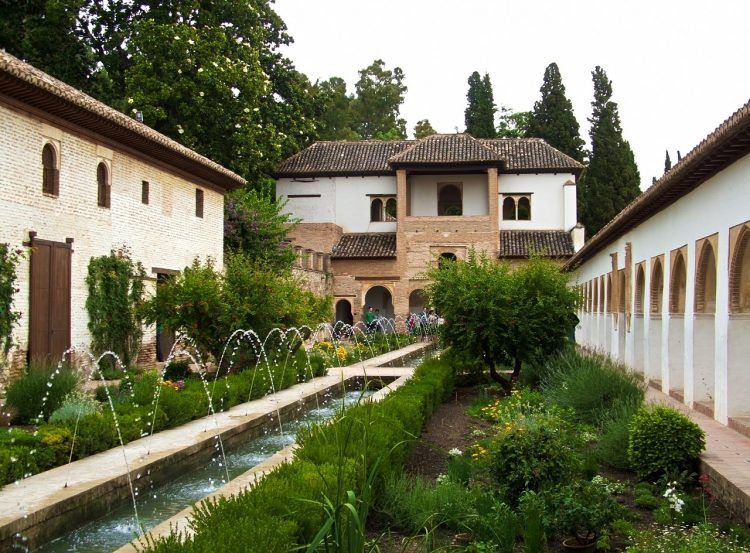
Among the plants introduced to or cultivated in Al-Andalus were banana, date palm, jujube, myrtle, oleander, olive, sweet orange, and watermelon. Sesame, sugar-cane and pistachio, apricot, cherry, and peach were grown in Andalusian gardens. Fruit trees were especially difficult to introduce, because the fruit retains its quality only through grafting of branches onto sturdy root stock or existing trees.
Plants grown for their beauty, such as the iris, jasmine, types of lily, morning glory, narcissus, hollyhocks, and marigolds are identified in these Andalusian works. Many fragrant herbs and medicinal plants like anise, caraway, and carob were grown there. Vegetables like spinach, asparagus, cauliflower, artichoke, carrots, and many types of beans were introduced with culinary fashions. They were also very nutritious, and helped to improve people’s overall health.
Industrial crops like hemp for rope and sacks, thistle, and dye-plants were also included in these sources. Alfalfa, whose name comes from Arabic, was an important plant for animal feed, and also restored the nitrogen in soil during crop rotation. Andalusian botanists knew about the life cycles of these plants, the soil and water conditions they needed, and how they could be reproduced. They wrote about crossing (by planting together) wild and cultivated varieties of plants to make stronger or better varieties.
Andalusian botanists built on the works of botanists in eastern Muslim lands, and travelers as well as merchants helped to spread these useful plants, while agricultural policies, irrigation, and cultivation of fine gardens in Al-Andalus provided the environment in which these plants could thrive and spread further.
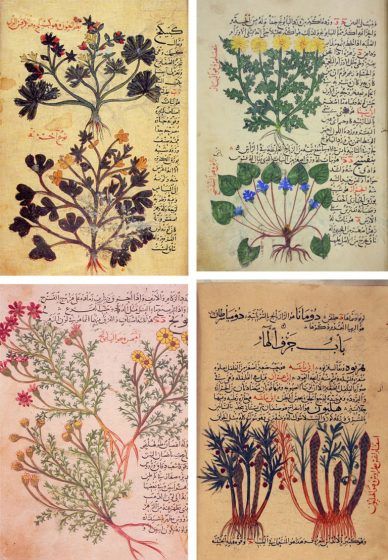
Other works of botany were those of Abul Abbas al-Nabati or Ibn Rumiyya (d. 1239 CE), Ibn Bajja (d. 1138 CE), who wrote about the reproduction of male and female plants, al-Ghafiqi (d. 1166 CE), on medicinal plants, and the botanical-pharmacological encyclopedia of Ibn Baytar (1197-1248 CE). These authors were scientists, not merely describing or cataloging, but developing knowledge and putting it into practical applications that served their societies.
The information collected by these botanists was carried to the farmers who needed it to improve their plants, to the markets where people could purchase seeds and plants for their gardens, or medicinal plants for the health of their families. These scholars knew and compared the popular names for plants in many languages.
Lasting influences: Ultimately, the knowledge of plants that the botanists of Al-Andalus and other Muslim lands collected, developed, and disseminated served to spread cultivation of many useful, beautiful, nutritious, and health-giving plants. These plants improved the lives of people in other parts of the world, and greatly enriched the gardens of Europeans north of Spain.
When Europeans colonized the New World, they introduced many of these plants, just as they received many from the New World. Without the varied agriculture of Al-Andalus, the Columbian Exchange might not have resulted in the global economic and agricultural exchange that is reflected in supermarkets around the world today.