Al-Andalus’ prosperous economy was based on agriculture and industries. According to historian of Islam Philip K. Hitti, “Spain under the Caliphate was one of the wealthiest and most thickly populated lands of Europe.” Some of its industries were based on mineral resources, such as pottery, glass, and metalwork. Other industries, such as textiles and leatherwork, were also based on the products of agriculture.
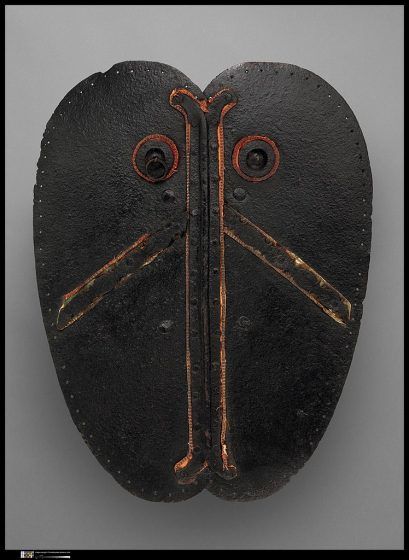
Córdoba had a flourishing leather industry, and cordovan leather became famous all over the world. Cordovan leather was richly dyed and polished to a finish that would last a lifetime. It was so strong that it was used to make armor breastplates for soldiers, and famous “Islamic” shields called adarga, or targa, from the Arabic word for “shield,” al-daraqa. Saddles, bridles, and other leather equipment for horses — both in the Old and New World — owe much to this Andalusian heritage.
Bookbinding with leather — stamped and gilded — has become the standard for fine books. Gold-tooling techniques for decorating books were introduced from the Muslim Al-Andalus in the 15th century, so that the art of beautiful books entered Europe along with the knowledge of Muslim civilization, and the technique of paper-making that made owning books accessible to more people.
Specialized tools made of brass for tooling, stamping and gilding spread along with the technique, with designs, based on flowers, leaves, animals, crests, and various lines — straight, broken and curved — were stamped or pressed into the leather using tools with a wheel or a handle.
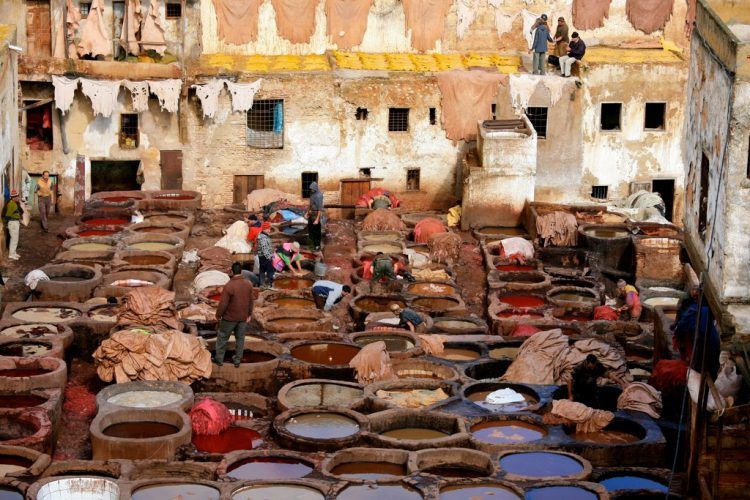
Craft production reached such a high level of artistry that the heritage of these crafts passed into the languages of Europe, and the crafts even outlasted the expulsion of Muslims and Jews from Spain in the 15th and 16th centuries. Some even persist today. One example is the term “cordovan” — luxurious reddish leather used for boots and shoes, belts, bags and saddles. The word for a shoemaker that was used with pride by the guilds through the 19th century was “cordwainer.” The art of tanning and embossing leather reached a high degree of perfection in Córdoba. The process of making it is still basically as it was in Al-Andalus, and is still practiced in the traditional manner in Fez, Morocco, today.
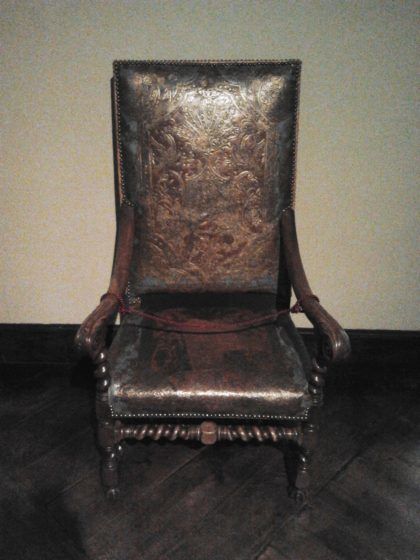
The wealth of Spain after the Age of Exploration, and the connections between the Spanish and Habsburg royal families, led to the spread of cultural forms and the export of specific luxury goods and techniques in Europe. For example, Dutch painters of the 16th century illustrated the homes of wealthy merchants of the rising middle class, who displayed goods imported from China, Africa, the Americas, and also from Spain. Leather goods in these paintings provide evidence of these goods in the growing towns and cities of the period. Leather is shown in these paintings as it was used to cover the surfaces and cushions of furniture.
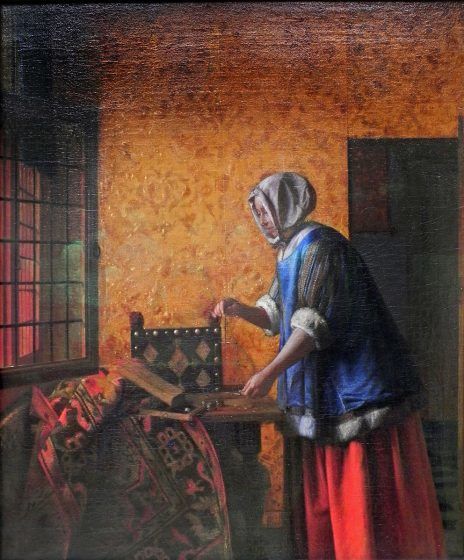
One writer says that the Muslims “made huge leather cordovans to cover entire walls” with a surface stamped with rich designs on wooden molds and then gilded like book-covers. The 16th century painting at right by Pieter de Hooch shows these leather wall coverings and a leather chair with brass hobnails and a gilded design. A Turkish carpet is also shown on the table.
In words for leatherworking techniques, in the colors, and styles and traditions, the heritage of Al-Andalus continues to the present day, in the industry itself, and in luxury and everyday items made from leather.