Pharmacology is the study of plants and other natural substances that cure or prevent diseases. From the very earliest times, people have identified such cures in their local environment. Knowledge of these cures was passed down orally. With the expansion of trade, certain important drugs made of herbs, spices, animal extracts, or minerals became known outside of their native environments. Either the substance was exported in dried or preserved form, or the plant itself was introduced to new places and grown there.
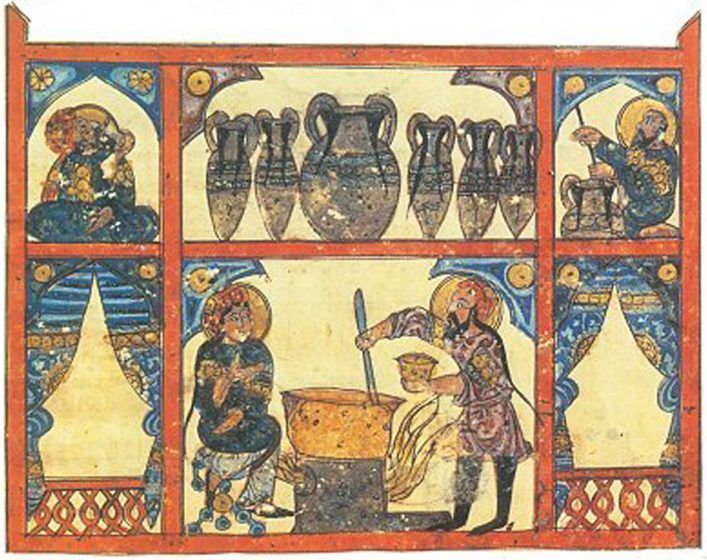
As medical science developed, knowledge about pharmacology was systematically collected in written form. Chinese, Indian, Persian, Greek, and Roman collections of knowledge exist, and information was traded among them. In the Mediterranean and western Asia, several important collections had been passed down, and became part of the legacy of knowledge on which physicians in Muslim lands could draw.
Because their geographic reach was so extensive, pharmacologists working in the Islamic tradition were able to include drugs known to a wide variety of peoples since ancient times. Among the important curative substances, or materia medica in Latin, the Islamic scientific books included plant and animal camphor, musk, sal ammoniac, and senna, a wide range of herbals and medicines from as far away as China, Southeast Asia, the Himalayas, southern India, and Africa. In addition to drugs, beneficial foods were included.
The tradition of medicine in Islam was founded on both good habits of healthful living practiced by Prophet Muhammad, and the tradition attributed to him, “God created a cure for every disease.” Taking up this challenge, Muslims and others working in the Islamic tradition traveled to seek knowledge, collected information and specimens, translated important works, and experimented with clinical practice in hospitals.
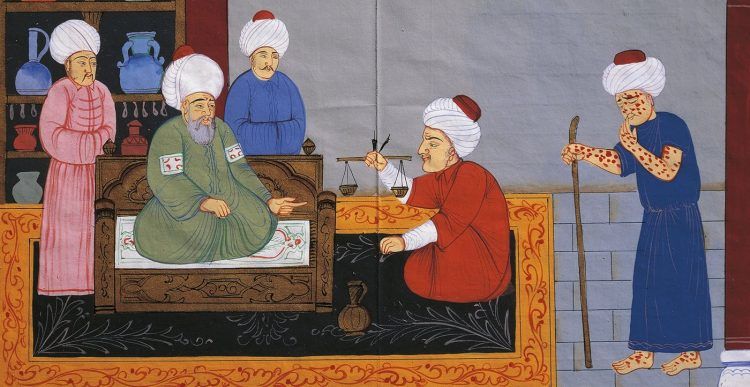
Al-Andalus both absorbed the benefits of this wide-ranging knowledge and added to it with medical and botanical work. Among the important works translated from Greek into Arabic was Dioscorides, which Hasdai ibn Shaprut (ca. 915-990 CE) helped translate in Córdoba. Another Córdoban, Ibn Juljul (b. 943 CE), wrote a commentary on Dioscorides’ work of pharmacology. In the eastern Muslim lands, pharmacists prepared medicines using instructions in directions found in the Treatise on Medicinal Drugs by Abu Raihan Muhammad al-Biruni (973-1048 CE), who shared information with famous physician Ibn Sina (980-1037 CE).
The most valuable and popular work on pharmacology in Al-Andalus, and later in other parts of Europe, was by Granadian botanist Ibn al-Baytar (died in 1248 CE), the Collection of Simple Drugs and Food, an encyclopedia of about 1500 medicinal substances that he collected over his lifetime. The book contains information about the substance, what it can be used for, how to prepare it, and how much to give the patient. As late as 1875 at the famous Bulaq press in Cairo, Ibn al-Baytar’s Comprehensive Book on Materia Medica and Foodstuffs was still being printed.
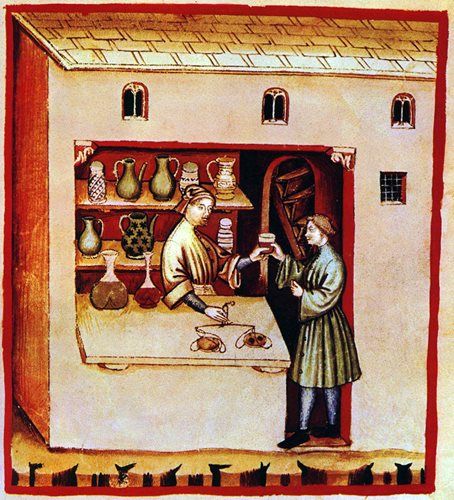
These books and the knowledge gained in hospitals, gardening, and pharmacies spread the reputation of medical practice in Spain, which was far advanced over that in the rest of Medieval Europe at that time. The earliest medical colleges grew up in Sicily, southern France, and other places where knowledge from Muslim lands was available. Through translation into Latin, direct teaching, and knowledge of Arabic, Europeans learned this valuable knowledge and founded medical science in the West. Andalusian contributions in preserving and adding to this body of learning are still recognized by scholars today.