Article: Science in al-Andalus
Written by Paul Lunde
Illustrated by Michael Grimsdale
The Medieval Christians of Spain had a legend that Roderick, the last king of the Visigoths, was responsible for unleashing the Arab invasion of the Iberian Peninsula because, in defiance of his plighted word, he unlocked the gates of an enchanted palace he had sworn not to tamper with. As far as the West was concerned, the Arab invasion did unlock an enchanted palace. Following the collapse of the Roman Empire, Vandals, Huns and Visigoths had pillaged and burned their way through the Iberian Peninsula, establishing ephemeral kingdoms, which lasted only as long as loot poured in, and were then destroyed in their turn. Then, without warning, in the year 711, came the Arabs — to settle, fall in love with the land and create the first civilization Europe had known since the Roman legions gave up the unequal fight against the barbarian hordes.
Spain first prospered under the rule of the Umayyads, who established a dynasty there after they had lost the caliphate in the East to the Abbasids. At first, the culture of the Umayyad court at Córdoba was wholly derivative. Fashions, both in literature and dress, were imitiative of those current in the Abbasids’ newly founded capital of Baghdad. Scholars from the more sophisticated lands to the east were always assured of a warm reception at the court of Córdoba, where their colleagues would listen avidly for news of what was being discussed in the capital, what people were wearing, what songs were being sung, and — above all — what books were being read.
Islamic culture was pre-eminently a culture of the book. The introduction of paper from China in 751 gave an impetus to learning and an excitement about ideas which the world had never before known. Books became more available than they had been even in Rome, and incomparably cheaper than they were in the Latin West, where they continued to be written on expensive parchment. In the 12th century, a man sold 120 acres of land in order to buy a single Book of Hours. In the ninth century, the library of the monastery of St. Gall was the largest in Europe, boasting 36 volumes. At the same time, that of Córdoba contained 500,000. The cultural lag between East and West in the Middle Ages can be attributed partly to the fact that the Arabs had paper, while the Latin West did not.
It took much more than paper to create an intellectual and scientific culture like that of Islamic Spain, of course. Islam, with its tolerance and encouragement of both secular and religious learning, created the necessary climate for the exchange of ideas. The court of Córdoba, like that of Baghdad, was open to Muslims, Jews and Christians alike, and one prominent bishop complained that young Christian men were devoting themselves to the study of Arabic, rather than Latin — a reflection of the fact that Arabic, in a surprisingly short time, had become the international language of science, as English has today.
Islamic culture in Spain began to flourish in earnest during the reign of ‘Abd al-Rahman II of Córdoba, as Arabic spread increasingly among his non-Muslim subjects, especially in the cities, leading to a great flowering of intellectual activity of all kinds.
In a courtly society, the tastes and predilections of the ruler set the tone for society at large, and ‘Abd al-Rahman II, passionately interested in both the religious and the secular sciences, was determined to show the world that his court was in no way inferior to the court of the caliphs at Baghdad. To this end, therefore, he actively recruited scholars by offering handsome inducements to overcome their initial reluctance to live in what many in the lands of the East considered the provinces. As a result, many scholars, poets, philosophers, historians and musicians migrated to Al-Andalus, and established the basis of the intellectual tradition and educational system, which made Spain so outstanding for the next 400 years.
Another result was that an infrastructure of public and private libraries, mosques, hospitals and research institutions rapidly grew up and famous scholars in the East, hearing of these amenities, flocked to the West. They in turn attracted students of their own; in the Islamic world it was not at all unusual for a student to travel thousands of miles to study at the feet of a famous professor.
One of the earliest of these scholars was ‘Abbas ibn Firnas, who died in the year 888 and who, had he lived in the Florence of the Medici, would have been a “Renaissance man.” He came to Córdoba to teach music, then a branch of mathematical theory, but — not a man to limit himself to a single field of study — soon became interested in the mechanics of flight. He constructed a pair of wings, made out of feathers in a wooden frame, and attempted to fly — preceding Leonardo da Vinci by some 600 years.
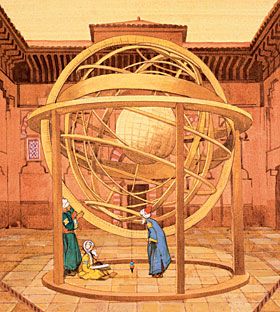
Luckily, ‘Abbas survived, and, undiscouraged, turned his mind to the construction of a planetarium in which the planets actually revolved — it would be extremely interesting to know the details of the gearing mechanism. It also simulated such celestial phenomena as thunder and lightning and was, of course, a wild success. Next ‘Abbas turned to the mathematical problems involved in the regularity of the facets of certain crystals and evolved a formula for manufacturing artificial crystals.
It must be remembered that a knowledge of the achievements of men like ‘Abbas has come to us purely by chance. It has been estimated that today there are 250,000 Arabic manuscripts in western and eastern libraries, including private collections. Yet in the 10th century, private libraries existed which contained as many as 500,000 books. Literally millions of books must have perished, and with them the achievements of a great many scholars and scientists whose books, had they survived, might have changed the course of history. As it is, even now, only a tiny proportion of existing Arabic scientific texts has been studied, and it will take years to form a more exact idea of the contributions of Muslim scientists to the history of ideas.
One of the fields most assiduously cultivated in Spain was natural science. Although Andalusian scholars did not make contributions as fundamental as those made by their colleagues in the East, those that they did make had more effect on the later development of science and technology, for it was through Spain and the scholars of Al-Andalus that these ideas reached the West.
No school of translators comparable to the House of Wisdom of al-Ma’mun existed in Spain, and Andalusian scholars seem not to have interested themselves in the natural sciences until the translations of the House of Wisdom reached them.
Interest in mathematics, astronomy, and medicine was always lively, however, because of their obvious utility — mathematics for commercial purposes, computation of the rather complicated Islamic laws of inheritance, and as a basis for measuring distances. Astronomy was useful for determining the times of prayer and adjusting the calendar, and the study of medicine needed no apology. The introduction of the new Aristotelian ideas, however, even in Arab dress, aroused a certain amount of suspicion in the conservative West, and it was some time before public opinion would accept that Aristotelian logic did not conflict with the revelation of Islam.
Part of the suspicion with which certain of the ideas emanating from the scholars of the Abbasid court were viewed was due to an inadequate distinction between sciences and pseudo-sciences. This was a distinction which the Muslims made at a much earlier date than western scholars, who, even during the Renaissance, tended to confound astronomy with astrology, chemistry with alchemy. Ibn Hazm, a leading Andalusian scholar of the 11th century and staunchly conservative, was very outspoken on this point. People who advocated the efficacy of talismans, magic, alchemy, and astrology he calls shameless liars. This rational approach did much to make Islam preeminent in the natural sciences.
The study of mathematics and astronomy went hand in hand. Al-Khwarizmi’s famous book entitled The Calculation of Integration and Equation reached Al-Andalus at an early date, and became the foundation of much later mathematical development. In it, Al-Khwarizmi dealt with equations, algebraic multiplication and division, measurement of surfaces and other questions. Al-Khwarizmi was the first to introduce the use of what he called “Indian” and we call “Arabic” numerals. The exact method of transmission of these numerals—and the place-value idea which they embodied—is not known, but the symbols used to represent the numbers had slightly different forms in eastern and western Islam, and the forms of our numerals are derived from those used in Al-Andalus. The work of al-Khwarizmi, which now only survives in a 12th-century Latin translation made in Spain, together with a translation of Euclid’s Elements, became the two foundations of subsequent mathematical developments in Al-Andalus.
The first original mathematician and astronomer of Al-Andalus was the 10th century’s Maslama al-Majriti. He had been preceded by competent scientists — men like Ibn Abi ‘Ubaida of Valencia, who in the ninth century was a leading astronomer, and the emigré from Baghdad, Ibn Taimiyyah, who was both a well-known physician and an astronomer — but al-Majriti was in a class by himself. He wrote a number of works on mathematics and astronomy, studied and elaborated the Arabic translation of Ptolemy’s Almagest and enlarged and corrected the astronomical tables of al-Khwarizmi himself. He compiled conversion tables, in which the dates of the Persian calendar were related to hijri dates, so that for the first time the events of Persia’s past could be dated with precision.
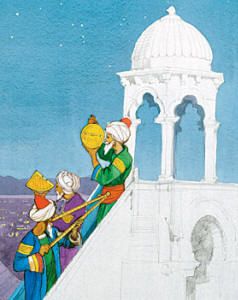
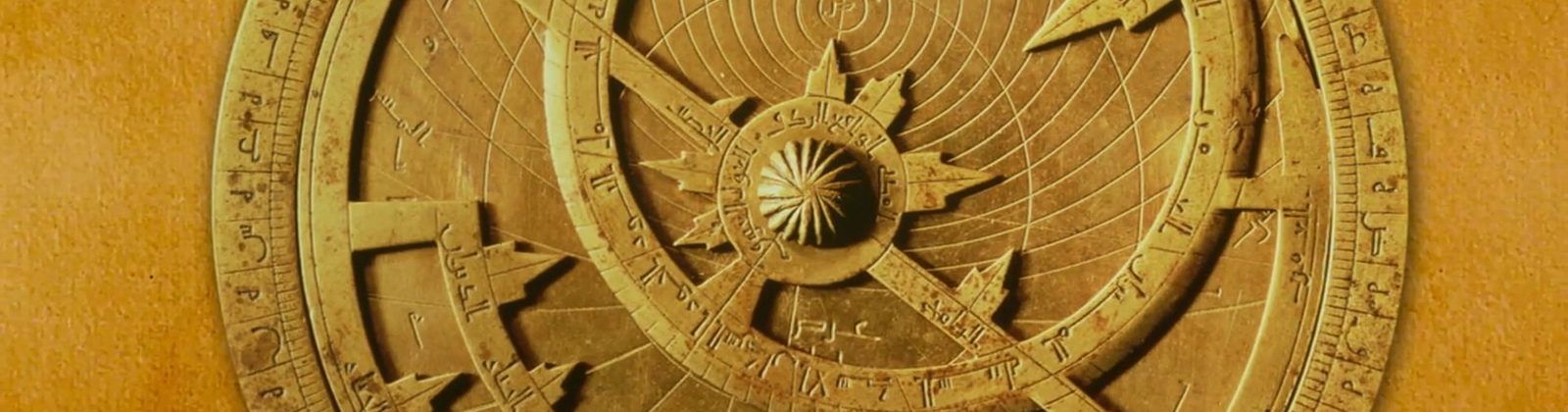
Al-Zarqali, known to the Latin West as Arzachel, was another leading mathematician and astronomer who flourished in Córdoba in the 11th century. He combined theoretical knowledge with technical skills, and excelled at the construction of precision instruments for astronomical use. He built a waterclock capable of determining the hours of the day and night and indicating the days of the lunar month. He contributed to the compilation of the famous Toledan Tables, a highly accurate compilation of astronomical data. His Book of Tables, written in the form of an almanac (almanac is an Arabic word meaning “climate,” originally indicating the stations of the moon) contains tables which allow one to find on what day the Coptic, Roman, lunar and Persian months begin; others give the position of the various planets at any given time; still others allow prediction of solar and lunar eclipses. He also compiled valuable tables of latitude and longitude; many of his works were translated, both into Spanish and into Latin.
Still another luminary was al-Bitruji (the Latin scholars of the Middle Ages called him Alpetragius), who developed a new theory of stellar movement and wrote the Book of Form in which it is detailed.
The influence of these astronomical works was immense. Today, for example, the constellations still bear the names given them by Muslim astronomers — Acrab (from ‘aqrab, “scorpion”), Altair (from al-ta’ir, “the flyer”), Deneb (from dhanb, “tail”), Pherkard (from farqad, “calf”)—and words such as zenith, nadir and azimuth, all still in use today, recall the works of the Muslim scholars of Al-Andalus.
But the Muslim science par excellence was the study of medicine. Interest in medicine goes back to the very earliest times. The Prophet himself stated that there was a remedy for every illness, and was aware that some diseases were contagious.
The great contribution of the Arabs was to put the study of medicine on a scientific footing and eliminate superstition and harmful folk-practices. Medicine was considered a highly technical calling, and one which required long study and training. Elaborate codes were formulated to regulate the professional conduct of doctors. It was not enough to have a mastery of one’s subject in order to practice medicine. Certain moral qualities were mandatory. Ibn Hazm said that a doctor should be kind, understanding, friendly, good, able to endure insults and adverse criticism; he must keep his hair short, and his fingernails as well; he must wear clean, white clothes and behave with dignity.
Before doctors could practice, they had to pass an examination, and if they passed they had to take the Hippocratic oath, which, if neglected, could lead to dismissal.
Hospitals were similarly organized. The large one built in Córdoba was provided with running water and baths, and had different sections for the treatment of various diseases, each of which was headed by a specialist. Hospitals were required to be open 24 hours a day to handle emergency cases, and could not turn any patient away.
Muslim physicians made many important additions to the body of medical knowledge which they inherited from the Greeks. Ibn al-Nafis, for example, discovered the lesser circulation of the blood hundreds of years before Harvey, and ideas of quarantine sprang from an empirical notion of contagion.
Another example is Ibn Juljul, who was born in Córdoba in 943, became a leading physician by the age of 24 (he began his studies of medicine at 14) and compiled a commentary on the De Materia Medica of Dioscorides and a special treatise on drugs found in Al-Andalus. In his Categories of Physicians, composed at the request of one of the Umayyad princes, he also presents a history of the medical profession from the time of Aesculapius to his own day.
During the 10th century, Al-Andalus produced a large number of excellent physicians. Several went to Baghdad, where they studied Greek medical works under the famous translators Thabit ibn Qurra and Thabit ibn Sinan. On their return, they were lodged in the government palace complex at Madinat al-Zahra. One of these men, Ahmad ibn Harran, was placed in charge of a dispensary which provided free medical care and food to poor patients.
Ibn Shuhaid, also known as a popular doctor, wrote a fundamental work on the use of drugs. He — like many of his contemporaries — recommended drugs only if the patient did not respond to dietary treatment, and said that if they must be used, simple drugs should be employed in all cases but the most serious.
Al-Zahrawi, who died in 1013, was the most famous surgeon of the Middle Ages. He was court physician of al-Hakam II, and his great work, the Tasrif, was translated into Latin by Gerard of Cremona and became a leading medical text in European universities in the later Middle Ages. The section on surgery contains a number of illustrations of surgical instruments of elegant, functional design and great precision. It describes lithotrites, amputations, ophthalmic and dental surgery and the treatment of wounds and fractures.
Ibn Zuhr, known as Avenzoar, who died in 1162, was born in Seville and earned a great reputation throughout North Africa and Spain. He described abscesses and mediastinal tumors for the first time, and made original experiments in therapeutics. One of his works, the Taysir, was translated into Latin in 1280 and became a standard work.
An outgrowth of the interest in medicine was the study of botany. The most famous Andalusian botanist was Ibn Baitar, who wrote a famous book called Collection of Simple Drugs and Food. It is an alphabetically arranged compendium of medicinal plants of all sorts, most of which were native to Spain and North Africa, which he had spent a lifetime gathering. Where possible, he gives the Berber, Arabic, and sometimes Romance names of the plant, so that for linguists his work is of special interest. In each article, he gives information about the preparation of the drug and its administration, purpose and dosage.
The last of the great Andalusian physicians was Ibn al-Khatib, who was also a noted historian, poet, and statesman. Among his other works, he wrote an important work on the theory of contagion: “The fact of infection becomes clear to the investigator who notices how he who establishes contact with the afflicted gets the disease, whereas he who is not in contact remains safe, and how transmitting is effected through garments, vessels, and earrings.”
Ibn al-Khatib was the last representative of the Andalusian medical tradition. Soon after his death, the energies of the Muslims of Al-Andalus were wholly absorbed in the long, costly struggle against the Christian reconquista.
Another field that interested the scholars of Al-Andalus was geography, and many of the finest Muslim works in this field were produced there. Economic and political considerations played some part in the development of this field of study, but it was above all their all-consuming curiosity about the world and its inhabitants that motivated the scholars who devoted themselves to the description of the earth and its inhabitants. The first steps had been taken in the East, when “books of routes,” as they were called, were compiled for the use of the postmasters of the early Abbasid caliphs. Soon, reports on faraway lands, their commercial products and major physical features were compiled for the information of the caliph and his ministers. Advances in astronomy and mathematics made the plotting of this information on maps feasible, and soon cartography became an important discipline in its own right.
Al-Khwarizmi, who did so much to advance the science of mathematics, was also one of the earliest scientific descriptive geographers. Basing his work on information made available through the Arabic translation of Ptolemy, al-Khwarizmi wrote a book called The Form of the Earth, which included maps of the heavens and of the earth. In Al-Andalus, this work was carried forward by Ibn Muhammad al-Razi, who died in 936, and who wrote a basic geography of Al-Andalus for administrative purposes. Muhammad ibn Yusuf al-Warraq, a contemporary of al-Razi, wrote a similar work describing the topography of North Africa. The wide-ranging commercial relations of Al-Andalus allowed the collection, from returning merchants, of a great deal of detailed information about regions as far north as the Baltic. Ibrahim ibn Ya‘qub, for example, who traveled widely in Europe and the Balkans in the late ninth century — he must have been a brave man indeed — left itineraries of his travels.
Two men who wrote in the 11th century collected much of the information assembled by their predecessors and put it into convenient form. One of them, al-Bakri, is particularly interesting. Born in Saltes in 1014, al-Bakri was the son of the governor of the province of Huelva and Saltes. Al-Bakri himself was an important minister at the court in Seville and undertook several diplomatic missions. An accomplished scholar as well as litérateur, he wrote works on history, botany and geography as well as poetry and literary essays. One of his two important geographical works is devoted to the geography of the Arabian Peninsula, with particular attention to the elucidation of its place names. It is arranged alphabetically, and lists the names of villages, towns, wadis and monuments which he culled from the hadith and histories. His other major work has not survived in its entirety, but it was an encyclopedic treatment of the entire world.
Al-Bakri arranged his material by country — preceding each entry by a short historical introduction — and describes the people, customs, climate, geographical features and the major cities, with anecdotes about them. He says of the inhabitants of Galicia, for example: “They are treacherous, dirty and bathe once or twice a year, even then with cold water; they never wash their clothes until they are worn out because they claim that the dirt accumulated as the result of their sweat softens their body.”
Perhaps the most famous geographer of the time was al-Idrisi, “the Strabo of the Arabs.” Born in 1100 and educated in Córdoba, al-Idrisi traveled widely, visiting Spain, North Africa and Anatolia, until he eventually settled in Sicily. There he was employed by the Norman king Roger II to write a systematic geography of the world, which is still extant, and is usually known as The Book of Roger.
In it, al-Idrisi describes the world systematically, following the Greek division of it into seven “climes,” each divided into 10 sections. Each of the climes is mapped—and the maps are highly accurate for the time in which they were compiled. He gives the distances between major cities and describes the customs, people, products and climate of the entire known world. He even records the voyage of a Moroccan navigator who was blown off course in the Atlantic, sailed for 30 days, and returned to tell of a fertile land to the west inhabited by naked savages.
The information contained in The Book of Roger was engraved on a silver planisphere, which was one of the wonders of the age.
Al-Andalus also produced the authors of two of the most interesting travel books ever written. Each exists in good English translation. The first is by Ibn Jubair, secretary to the governor of Granada who in 1183 made the Hajj, and wrote a book about his journey, called simply Travels. The book is in the form of a diary, and gives a detailed account of the eastern Mediterranean world at the height of the Crusades. It is written in clear, elegant style, and is filled with the perceptive, intelligent comments of a tolerant — and often witty — man.
The most famous of all the Andalusian travelers was Ibn Battuta — the greatest tourist of his age, and perhaps of any. He went to North Africa, Syria, Makkah, Medina and Iraq. He went to Yemen, sailed down the Nile, the Red Sea, Asia Minor, and the Black Sea. He went to the Crimea and to Constantinople. He went to Afghanistan, India and China. He died in Granada at the age of 73.
It is impossible to do justice to all the scholars of Al-Andalus who devoted themselves to the study of history and linguistic sciences. These were the prime “social sciences” cultivated by the Arabs, and both were brought to a high level of art in Al-Andalus. For example, Ibn al-Khatib, whose theory of contagious diseases we have touched on already, was the author of the finest history of Granada that has come down to us.
Ibn al-Khatib was born in 1313, near Granada, and followed the traditional educational curriculum of his time — he studied grammar, poetry, natural sciences and Islamic law, as well, of course, as the Qur’an. His father, an important official, was killed by the Christians in 1340. The ruler of Granada invited the son to occupy the post of secretary in the department of correspondence. He soon became the confidant of the ruler and gained a position of great power.
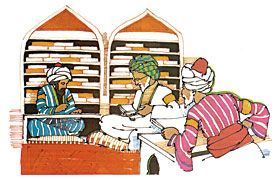
Despite his busy political career, Ibn al-Khatib found time to write more than 50 books on travel, medicine, poetry, music, history, politics and theology.
The achievements of Ibn al-Khatib were rivaled only by those of his near contemporary Ibn Khaldun, the first historian to seek to develop and explicate the general laws which govern the rise and decline of civilizations. His huge, seven-volume history is entitled The Book of Examples and Collection from Early and Later Information Concerning the Days of Arabs, Non-Arabs and Berbers. The first volume, entitled Introduction, gives a profound and detailed analysis of Islamic society and indeed of human society in general, for he constantly refers to other cultures for comparative purposes. He gives a sophisticated analysis of how human society evolved from nomadism to urban centers, and how and why these urban centers decay and finally succumb to less developed invaders. Many of the profoundly disturbing questions raised by Ibn Khaldun have still not received the attention they should from all thinking people. Certainly, anyone interested in the problems of the rise and fall of civilizations, the decay of cities, or the complex relationship between technologically advanced societies and traditional ones should read Ibn Khaldun’s Introduction.
Another great area of Andalusian intellectual activity was philosophy, but it is impossible to do more than glance at this difficult and specialized study. From the ninth century, Andalusian scholars, like those in Baghdad, had to deal with the theological problems posed by the introduction of Greek philosophy into a context of Islam. How could reason be reconciled with revelation? This was the central question.
Ibn Hazm was one of the first to deal with this problem. He supported certain Aristotelian concepts with enthusiasm and rejected others. For example, he wrote a large and detailed commentary on Aristotle’s Posterior Analects, that abstruse work on logic. Interestingly, Ibn Hazm appears to have had no trouble relating logic to Islam; in fact, he gives illustrative examples of how it can be used in solving legal problems, drawn from the body of Islamic law. Nothing better illustrates the ability of Islam to assimilate foreign ideas and acclimatize them than Ibn Hazm’s words in the introduction to his work: “Let it be known that he who reads this book of ours will find that the usefulness of this kind of work is not limited to one single discipline but includes the Qur’an, hadith and legal decisions concerning what is permissible and what is not, and what is obligatory and what is lawful.”
Ibn Hazm considered logic a useful tool, and philosophy to be in harmony, or at least not in conflict, with revelation. He has been described as “one of the giants of the intellectual history of Islam,” but it is difficult to form a considered judgment of a man who wrote more than 400 books, most of which have perished or still remain in manuscript.
Ibn Bajjah, whom western scholastic theologians called Avempace, was another great Andalusian philosopher. But it was Averroës — Ibn Rushd — who earned the greatest reputation. He was an ardent Aristotelian, and his works had a lasting effect, in their Latin translation, on the development of European philosophy.
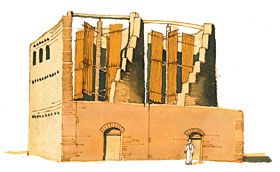
Islamic technological innovations also played their part in the legacy that Al-Andalus left to Medieval Europe. Paper has been mentioned, but there were others of great importance — the windmill, new techniques of working metal, making ceramics, building, weaving and agriculture. The people of Al-Andalus had a passion for gardens, combining their love of beauty with their interest in medicinal plants. Two important treatises on agriculture — one of which was partially translated into Romance in the Middle Ages, were written in Al-Andalus. Ibn al-‘Awwam, the author of one of these treatises, lists 584 species of plants and gives precise instructions regarding their cultivation and use. He writes, for example, of how to graft trees, make hybrids, stop blights and insect pests, and how to make floral essences and perfumes.
This area of technological achievement has not yet been examined in detail, but it had as profound an influence on Medieval European material culture as the Muslim commentators on Aristotle had on Medieval European intellectuals. For these were the arts of civilization, the arts that make life a pleasure rather than a burden, and without which philosophical speculation is an arid exercise.
Paul Lunde, an independent scholar who divides his time between Seville and Cambridge, England, researches and writes about the Middle East. His most recent book is Islam: Culture, Faith and History (2001, Dorling Kindersley).
Michael Grimsdale, one of Britain’s foremost illustrators, paints portraits, animals, sports and travel themes in a variety of media. Widely collected and exhibited, his paintings have also appeared in advertising, books and magazines.
This article appeared on pages 20-27 of the Al-Andalus print edition of Saudi Aramco World.