Abraham lived during the Iron Age sometime after 2000 B.C.E., in the city of Ur in Mesopotamia. Accounts of his life vary but all have two common threads:
- Abraham (or Abram) was called by God to take his family and migrate to another location.
- Abraham was the ancestor of many peoples. Most prominently were the Semitic people known as Jews and Arabs. Some of the Jews later became Christians and Muslims. The Semites are named after the origin of their languages. Hebrew and Arabic are both Semitic languages.
Among Abraham’s descendants are the major prophets of the monotheistic tradition. During the past four thousand years, this tradition has brought about the three world religions called Judaism, Christianity, and Islam.
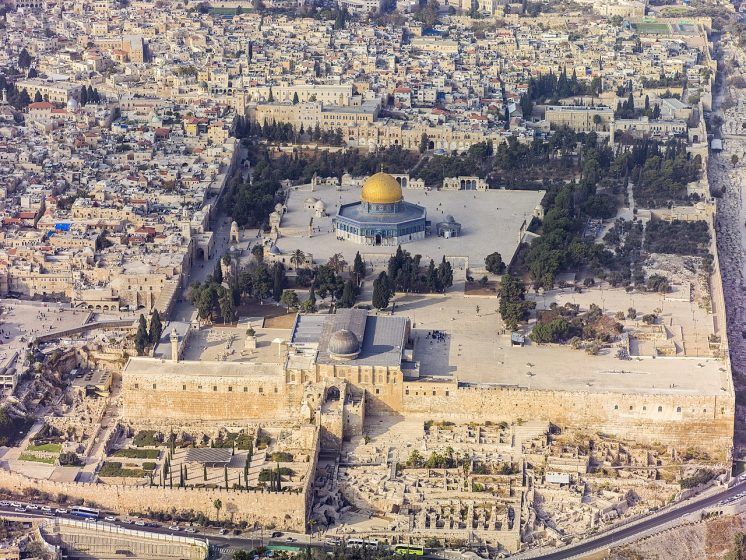
The land where Abraham and his descendants settled became known as the Holy Land. This region is where the prophets described in the Biblical and Quranic scriptures lived, traveled, and preached.
The region includes the eastern Mediterranean coast between Mesopotamia and Egypt, and the desert toward its south. Today, that land includes all or part of several modern-day countries, such as Israel, Palestine, Jordan, Saudi Arabia, Yemen, and parts of Egypt, Iraq, and Syria.
Over time, these lands have been the place of spiritual journeys, settlements and cities, trade, colonies, wars, and empires. They have been lands of human joy and sorrow, conflict and cooperation, and great diversity of thoughts and ideas.
The prophets mentioned in the Torah, Bible, and Quran were born and lived in this region. Therefore, this geographic space is holy to all of the Abrahamic faiths.
Unfortunately, this shared space has also been a great scene of conflict. Beliefs about the land and its heritage differ among the three faiths. For thousands of years there has been disagreement about who can claim the right to govern the territory and possess its resources, as well as control the holy sites.