Calligraphy, from the Greek, means the art of beautiful writing. Before printing, writing was done by pressing lines into clay, carving a hard surface like stone, or tracing lines with ink on surfaces such as papyrus, leather, parchment (beaten, stretched sheepskin), or paper. Paper — a Chinese invention made from wood or plant pulp, cotton fiber or recycled rags entered Muslim culture with the spread of Islam into Central Asia during the seventh and eighth centuries.
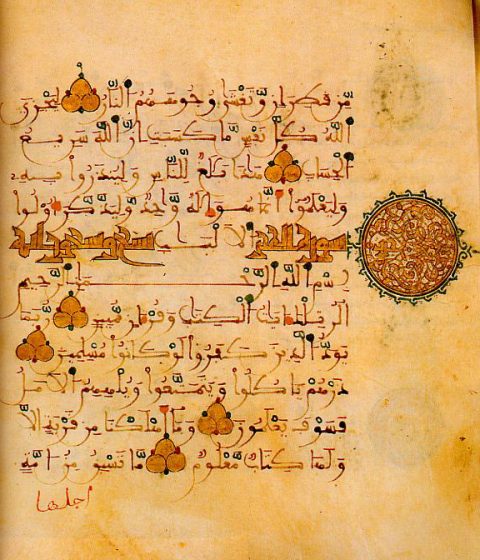
Paper played a major role in the spread of literacy and the culture of the book, and in the expansion of the Arabic language as the medium of Islamic culture and learning. Paper is lighter and much less expensive than parchment, lasts much longer than papyrus, and accepts all kinds of ink, colored pigments and finishes to make it smooth or rough. As a result of these qualities, literacy and libraries expanded very quickly in Muslim lands.
The art of beautiful writing in Arabic — first used to honor the words of Islam’s holy book, the Qur’an became the highest art form. Figurative art, in contrast, which involved drawing people and animals, was never associated with religious literature and arts. It was limited to secular, or worldly, works of art and literature. For example, medical books were illustrated with human figures for a purpose. Stories were illustrated, but until later centuries, stories from the Qur’an and the prophets were not. In the decoration of houses of Islamic worship the masjid, or mosque figurative drawing was very rare. Images of flowers and plants, geometric designs and mathematical patterns were interwoven with the words of the Qur’an.
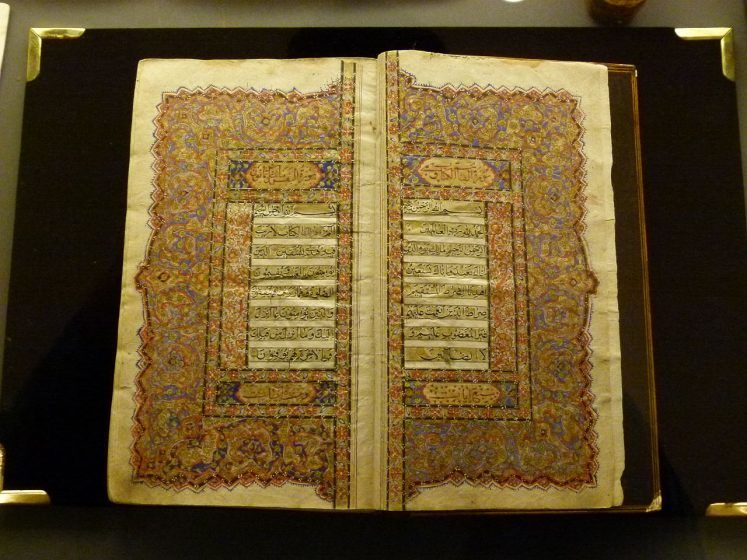
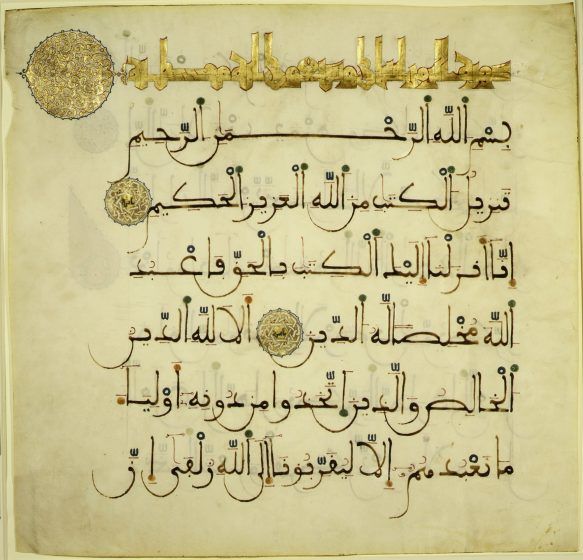
Over time, various styles of Arabic calligraphy developed. Square, angular Kufic script was one of the early forms. Other forms, more flowing and rounded developed over time. One major change from the earliest Arabic scripts was the effort to make it easy for non-Arabs to read accurately. That was an important factor in preserving the Qur’an. A system of dots or points was added to the letter shapes to distinguish them clearly from one another, and a set of vowel marks and other symbols was added to signify how the word should be pronounced. Both of these added features were incorporated into the forms of calligraphy in harmonious and well proportioned ways.
Calligraphers working in Al-Andalus and parts of North Africa and later West Africa developed a distinctive style of Arabic calligraphy. An example of the round, flowing Andalusi script is shown at left, with a heading in the angular Kufic script in gold, at the top of the page. This style is also found in many libraries of West Africa such as Timbuktu, where efforts are being made to preserve thousands of beautiful examples of this script.
Arabic calligraphy also served the interest of building libraries in Al-Andalus, to hold collections that reproduced the knowledge gathered in Muslim lands over the centuries. Rulers of cities like Córdoba, Seville, and Toledo sponsored libraries of thousands of books, all hand written, and employed staffs of calligraphers to make copies and embellish works in Arabic. It is known that there were women in Al-Andalus working both in decorative calligraphy and as copyists of books, and that wealthy patrons of libraries and private collections included educated women in cities such as Córdoba, Seville, and Granada.
Among the known women scholars of Spain recorded during the 11th century CE were names such as Ayisha bint Ahmad, Radiyah, Khadijah bint Ja’far, Labna and Fatimah. Radiyah (died 1032 CE) was the wife of Labib, a noble at the Córdoban court. Women of less wealthy families were employed as copyists, and historian Ibn al-Fayyad reported that 170 women were engaged as copyists in only one section of Córdoba. Books of poetry, astronomy, philosophy, mathematics, agriculture, and medicine were decorated with illustrations and written out in an efficient, well defined script.
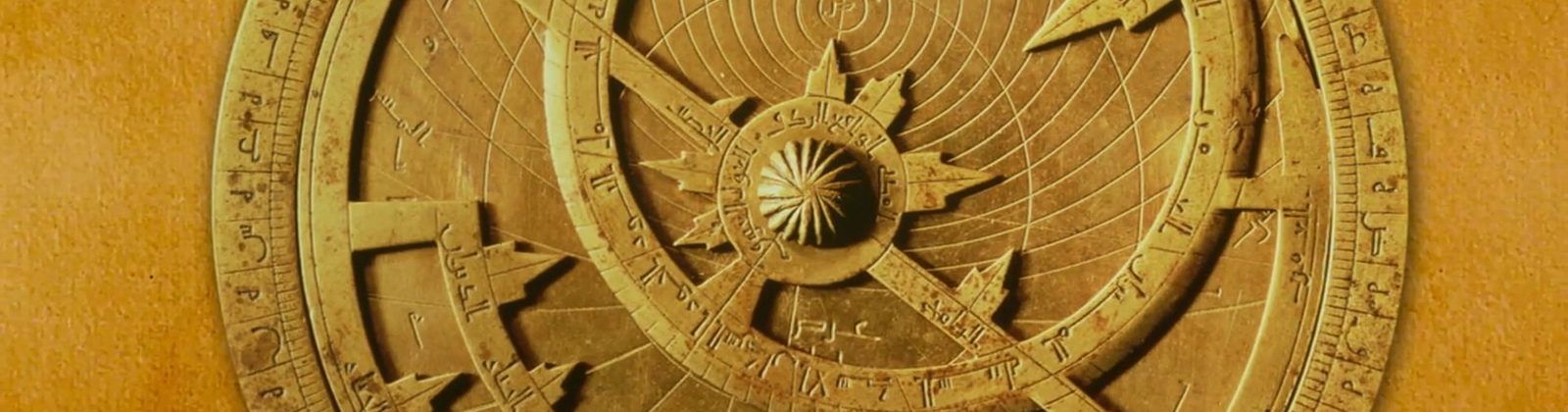
Calligraphy was also a major decorative feature in other art forms. It appeared on ceramic vessels, carved wooden and ivory boxes, and leather-covered objects with gold stamping. It was woven into tiraz borders on textiles, inlaid or engraved on metalwork and scientific instruments, and stamped onto coins.
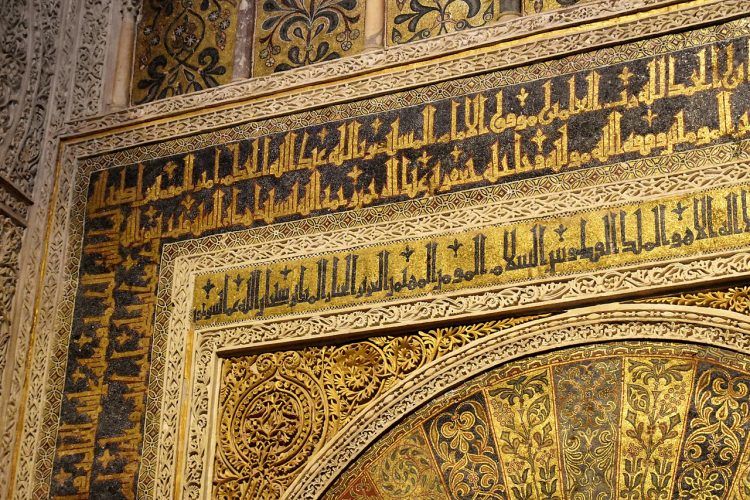
Architecture in Al-Andalus was richly decorated with calligraphy. Not only the interior of mosques, but also the walls and niches of palaces, were embellished with calligraphy. In the mosque (or masjid), walls, domes, doorways and arches, as well as bands around the perimeter, or on a minaret (tower for the call to prayer) were architectural elements that displayed elegant designs of Qur’anic verses. Repetition of a name of God might be incorporated into brickwork, or combined with curving arabesques or plant forms. Geometric designs were usually alternated with bands of calligraphy. The forms of Arabic lettering in Al-Andalus were distinctive for their use of simple, angular Kufic such as the mosaic lettering done in golden glass tesserae in the Mosque of Córdoba, shown below, and a flowing Andalusi style with dramatic curves, shown in the plasterwork of the Nasrid period, at left.